Department of Marine Resources News
New offshore boat joins DMR fleet
The Bureau of Marine Patrol launched its brand new 57-foot P/V Allegiance, the largest patrol vessel in its fleet which will be used in offshore patrols. It was officially put into service on Thursday, June 11 during a christening event at Perry’s Lobster in Surry.

“Maine Marine Patrol routinely patrols commercial fishing activity offshore and hauls and inspects tens of thousands of lobster traps annually,” said Marine Patrol Colonel Matt Talbot.
“While still capable of supporting Marine Patrol’s mission near shore, the new vessel will better position Marine Patrol to conduct offshore commercial fisheries enforcement, including the ability to safely haul and inspect large lobster trawls in federal waters. It will also be used to respond to search and rescue incidents, monitor fisheries in addition to lobster including scallop, Atlantic herring, menhaden, and groundfish, among others."
The P/V Allegiance will be based in Boothbay Harbor and assigned to Marine Patrol Specialist Evan Whidden. It replaces the 29-year-old, 35-foot P/V Vigilant.
The P/V Allegiance was constructed and finished by Wesmac Custom Boats in Surry. It is powered by a low-emission Tier 4 Man Diesel V-12 1450hp engine which can cruise in excess of 20 knots. The vessel is equipped with Furuno navigation electronics, and a heavy duty 17-inch hauler. It has significant deck space and an open stern which will allow officers to safely handle and set back the larger offshore lobster trawls.
The vessel is also equipped to carry a 15-foot Ribcraft Rigid Hull Inflatable boat on deck, which can be used for at-sea boardings to check vessels for compliance with marine resources laws.
Coastal boaters beware of whales

In July, the Department of Marine Resources (DMR) sighted numerous humpback whales close to shore, spanning from Port Clyde up through Jonesport. In response to reports of boaters coming in close proximity to these whales, DMR reminds boaters that this can result in injuries to both the whales and the people.
When boating in waters shared with whales, boaters should:
Keep your distance NOAA recommends all fishermen and boaters, including kayakers and paddleboarders, keep a safe distance from humpback whales of at least 100 feet—preferably 300 feet.
Slow down In areas where you suspect whales will be present, slowing to 10 knots helps to prevent collisions by allowing both you and the whale time to react.
Steer clear of spouts and bubbles If you see any large bubbles or disturbances in the water, it could be a whale feeding. Keep your distance.
Protect your recreational fishing gear Don’t cast or troll near or around humpback whales or bubble clouds. If a bubble cloud appears while you’re fishing, pull up your gear, if possible.
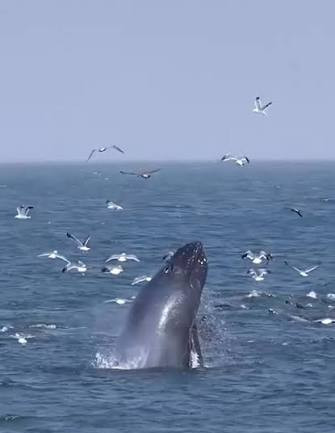
Humpbacks sometimes create bubble clouds to
corral their prey. Fishermen or boaters in these bubble patches run the risk of colliding with a humpback whale as it rapidly approaches the surface.
As a reminder, all whales in U.S. waters are protected by the Marine Mammal Protection Act, which makes it illegal for people to harm, injure, kill, chase, or harass whales or any other marine mammal. Harassment includes any activity that results in changes to the whales’ natural behaviors, such as feeding.


I’m glad to see Geary’s Landings highlighted alongside the Department of Marine Resources’ work and events. I’ve been using https://falai.online/fal-ai-workflows
I’m curious to learn more about the work at Geary’s Landings and the Department of Marine Resources’ latest updates. I’ve been using https://deevid.pro
The Geary’s Landings section is a helpful way to see the Department of Marine Resources’ work in action. I’m also checking out https://accurig.pro
I’m glad to see Geary’s Landings highlighted alongside the Department of Marine Resources’ ongoing work. For updates and ways to support these efforts, I’ve been using https://fashn.pro
I’m curious to learn more about the work highlighted at Geary’s Landings and how it supports local marine resources. Check out https://syllaby-ai.pro