Guest Column: Menhaden reallocation could benefit both lobstermen, anglers
By Jaclyn Lunaas
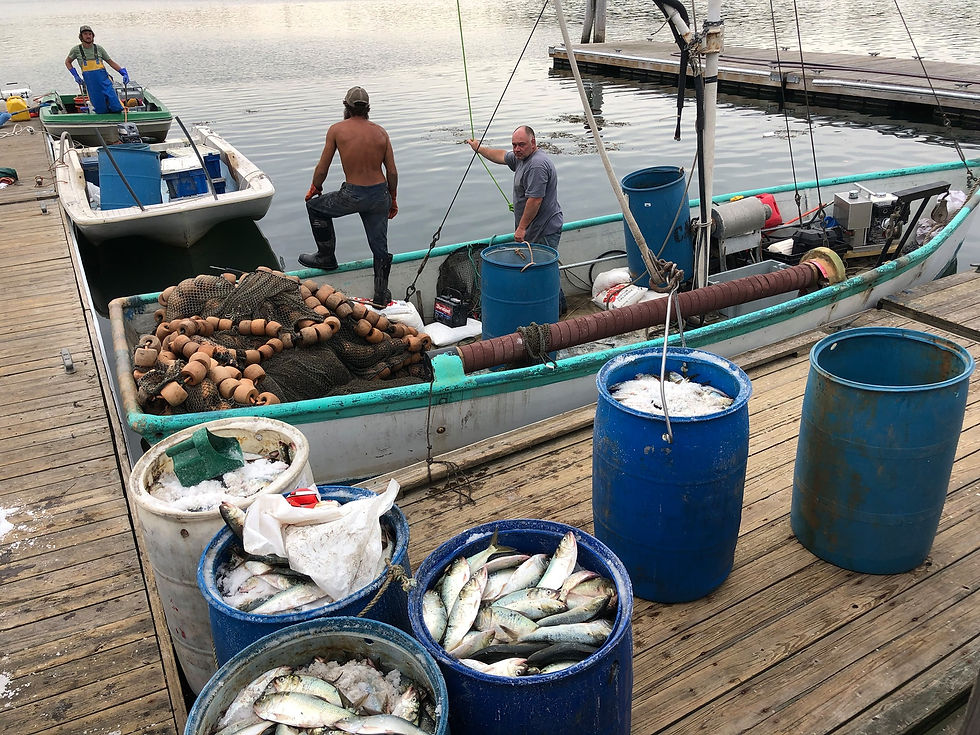
It’s no secret that pogies have become a critically important bait source for Maine lobstermen. The state’s allowed quota for pogies is not an abstract management number. It could determine whether the bait that lobstermen rely on is available, how much they pay for it, and whether they can count on that supply next season.
The Atlantic States Marine Fisheries Commission (ASMFC) is considering initiating a process this November to reconsider how Atlantic menhaden are allocated among the states.

Through this process, the ASMFC would examine whether state allocations of Atlantic menhaden still make sense based on today’s fishery realities and the needs of coastal communities. For Maine’s lobster industry, there is a strong reason to have that conversation.
Menhaden have become an increasingly important baitfish for Maine’s lobster fleet. In 2025, Maine fishermen landed more than 31 million pounds of Atlantic menhaden worth nearly $19 million, making it the state’s third-most-valuable commercial fishery. Yet, following a 20% coastwide Atlantic quota reduction, Maine’s 2026 allocation was only 19.6 million pounds. The numbers demonstrate something important: Maine’s menhaden fishery has grown beyond the size of the state’s baseline allocation.
Under the current system, Maine receives less than 5% of the coastwide quota, while Virginia receives more than 75%. Most of Virginia’s allocation is sold to a foreign-owned company that reduces pogies into animal feed and fish oil rather than using them for bait.
Current state allocations are based largely on historical landings, but Maine’s fishery has changed drastically. The state’s menhaden allocation hasn’t kept pace. Meanwhile, there are many signs indicating more pogies are being harvested in Virginia and the Chesapeake Bay than the system can handle. That pressure doesn’t just affect the Chesapeake. New England and other areas in the Atlantic suffer because pogies are migratory and the Bay serves as their primary nursery, replenishing the coastwide stock.
Maine has thus far been able to use quota transfers and other mechanisms to help meet its bait needs. Those tools are valuable, but they do not eliminate the underlying problem. Fishermen should not have to depend so much on annual negotiations between states to secure access to an increasingly important baitfish.
A reallocation process would give the ASMFC the opportunity to examine whether its current allocation system could better reflect the current fishery and the needs of Maine’s lobstermen who depend on it. Recreational fishing, conservation groups, and some lobstering groups are asking the ASMFC to start the conversation about fairly allocating menhaden quotas.
Maine lobstermen have the strongest reason to care about this issue because pogies are now an essential bait source. But they are not the only fishermen who depend on them.
Recreational anglers use pogies to target striped bass, bluefish, tuna and other sportfish. A 2026 study found that recreational fishing involving Atlantic menhaden as bait generated approximately $804 million in angler spending and more than $1.5 billion in total economic output in 2025, supporting more than 7,200 jobs nationwide. That is a major reason the Theodore Roosevelt Conservation Partnership (TRCP), a national hunting and angling conservation organization where I work, is supporting reallocation. Our mission is to guarantee all Americans quality places to hunt and fish.
Both commercial and recreational fishermen benefit when Maine and other states have reliable access to pogies. Maine should not have to choose between its commercial and recreational fishing economies. Both depend on healthy pogy populations and dependable access to this valuable baitfish.
TRCP recognizes that many Maine fishermen are concerned about further reductions in the coastwide menhaden quota. A fisherman could reasonably ask: “If the coastwide quota is limited, what good does moving the allocation around do?”
The answer is that while reallocation cannot create more pogies in the Gulf of Maine or increase the number of fish that scientists determine should be harvested, reallocation can ensure that access to this public resource is fair and isn’t penalizing fishermen outside of Virginia.
TRCP supports using the best available science to determine the appropriate 2027-2028 coastwide quota. We support catch reductions if the science calls for them, even as we recognize all stakeholders don’t agree. That may sound contradictory alongside our support for reallocation. It isn’t. That’s why we’ve created a petition anyone can sign that specifically asks the ASMFC to initiate a reallocation process in November (https://www.trcp.org/action-alert/insist-on-fair-menhaden-reallocation-for-atlantic-states/).
TRCP believes the ASMFC should examine whether the size of each state’s slice of the pie still makes sense. If the ASMFC reduces the coastwide harvest while leaving allocation percentages unchanged, Maine’s share will shrink along with it, which is not reasonable or fair based on current state harvest levels and need.
Even if ASMFC initiates discussion on reallocation, there is no guarantee that Maine will receive a particular percentage of pogies. Rather, by initiating a reallocation discussion, ASMFC would begin a transparent process in which fishermen, states, scientists and other stakeholders can examine the current system by considering current landings, where menhaden are actually available, the economic importance of menhaden as bait, the needs of commercial and recreational fisheries, and the conservation limits established by the best available science.
Maine fishermen should not be expected to continue to accept an allocation system that has not kept pace with today’s fishery. Maine lobstermen need a more reliable share of the baitfish they depend on, and a fair opportunity to shape an allocation system that reflects today’s fishery.
Theodore Roosevelt Conservation Partnership is a nonprofit organization that works to secure and expand public access to hunting and fishing grounds and advocates for policies and science-backed strategies that protect fish and wildlife habitats.


Comments