Lobster Boat Race History: That Ol' Devil Propane
By Brian Robbins
When I first started at Commercial Fisheries News (CFN) back in 1988, they asked if I would cover the lobster boat races held along the Maine coast during the summer. I was up for it, although I’d never attended a race prior to that. We were always either out on an offshore lobster trip, getting ready to leave on a trip, or had just come home from a trip and lobster boat races just weren’t on my radar. I soon figured out it wasn’t going to be as easy as it looked.

I quickly realized the classes and/or rules were different from town to town on the race circuit. A boat that cleaned house at one location might be deemed illegal to race the following weekend somewhere else, without having changed a thing. That was the inspiration for CFN working to help institute uniform classes and a points system to determine season champs in each class.
Eventually, the Maine Lobster Boat Racing Association (MLBRA) was formed to oversee the sport. MLBRA currently hosts 11 events (10 plus Pemaquid, which is non-points and has its own classes) along the Maine coast.
All of this is to lay the groundwork for a little bit of behind-the-scenes history from the early 1990s — and to remind you of something that applies to most anything in life: it’s not always a matter of rules being made to be broken, it’s often more a matter of what the rules don’t say that really counts.
Take, for instance, nitrous oxide, the notorious blue bottle that, when introduced to the air intake of a gasoline engine in small, metered doses, can provide a tremendous kick in the pants for short periods of time. A little too much nitrous can wreak havoc inside an engine and there’s a fine line between “just enough” and “a little too much” which can easily be ignored in the throes of competition.
Thus, in an effort to save racers (and their engines) from themselves, the rules clearly stated back in the early 1990s that nitrous oxide was prohibited from use aboard a gasoline-powered boat. But nobody said anything about propane — especially injecting it into the air intake of a diesel engine.
And that’s where Leeland Peabody of Cutler enters our story. Anybody who was following the lobster boat races back then will remember Leeland and his 33’ Young Brothers Mark I as a couple of crowd pleasers. He’d bought the 33’x11’ Ernest Libby-designed hull secondhand. She’d actually been serving her time as a quahog dragger prior to that.
Leeland had Little River Boat Shop in Cutler strip the old warhorse down to her bare hull and totally rebuild her, dropping a 6V-53TI Detroit Diesel (400 hp @ 2800 rpm) into the bilges before buttoning her up.
When I tell you Leeland put his heart and soul into racing the Mark I, I do mean it literally: he had some heart trouble that was serious enough to warrant him always having a vial of nitroglycerin pills in his pocket. And a day at the races wasn’t what you would call stress-free.
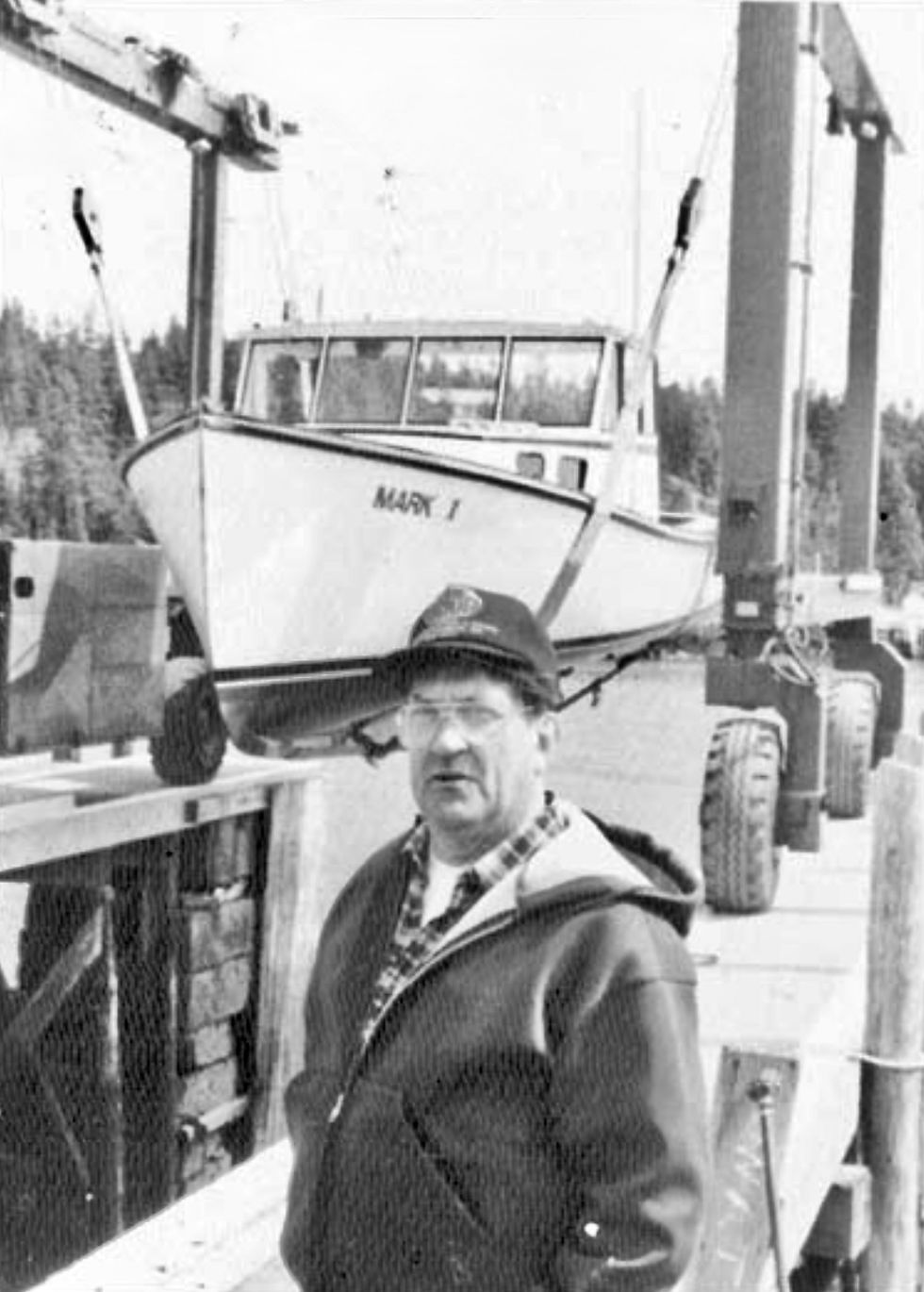
Anyway, Leeland — as did many racers over the years — let me in on a lot of his experiments to gain more speed, knowing that I wouldn’t reveal them in print ... or tell any of his competition.
“Look at this,” he said to me one day when I stopped by his home in Cutler. He was out in the garage with a copy of a magazine aimed at RVs and campers. “Why?” I asked. “I don’t want to go camping.”
“Just read this,” Leeland said, his finger stabbing a paragraph about a “hill climb boost” feature in some brand of diesel-powered RV. When a little oomph was needed on an uphill grade, a driver could press a button on the dash, releasing a metered flow of propane (from the onboard tank for the cookstove or whatever) into the air intake of the RV’s diesel.
“I’m going to try that,” said Leeland.
“Isn’t it illegal?” I asked, suddenly wishing I wasn’t having this conversation.
“Nope. Read the rules: no nitrous with gas engines. It doesn’t say anything about propane and diesels.”
Which led me to my next question when I stepped aboard the Mark I down at the shore and saw Leeland had already plumbed up a hose to the intake with a grill-sized propane bottle stashed down in the bilges: “If it’s not illegal, how come you’re hiding it?”
Leeland looked at me with the expression you’d normally reserve to use with the Village Idiot.
“If it works, do you want everybody using it?”
Point taken.
Eventually, word got out and a lot of people did use (or at least tried) propane with varying degrees of success. But, to my knowledge, Leeland was the first and he figured out the key: you wanted to be somewhat over-fueled. In the case of the old 2-cycle Detroits, it was a matter of swapping out injectors. Leeland had a set that Arvid Young had used in a 6V-92TA that resembled garden hose nozzles.
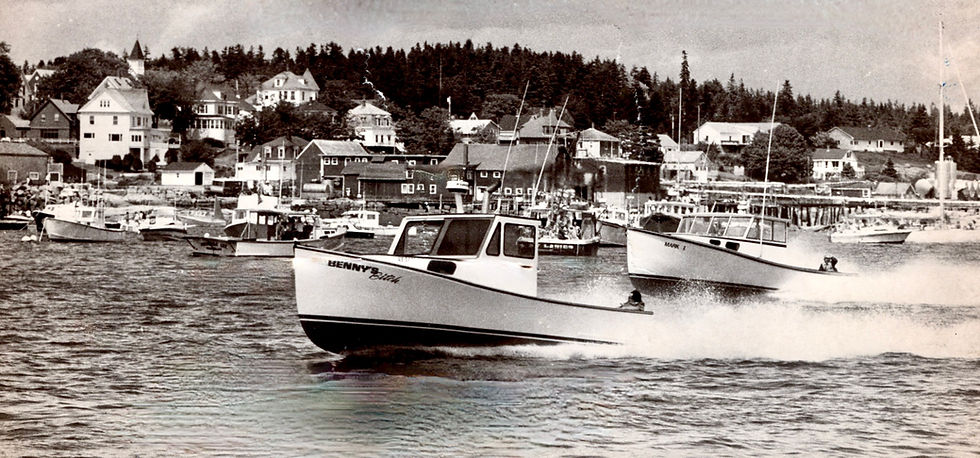
Without the propane, the Mark I’s 6V-53 would smoke and wallow if you laid on the throttle too hard. But step on that ball valve down by the coaming of the engine box to kick in the propane and that smoke would clean right up — and you were flying. Just remember to shut that valve off when you hauled the throttle back or you’d hear some awfully weird noises coming out of that poor 6V-53.
Sadly, Leeland passed away in 2023. He and his wife Debbie had moved to Arkansas a number of years ago, but he’d always stayed in touch. And loved talking old race stories.


I have always found networking terminology confusing when several addresses look almost identical. The discussion of 10.0.0.0.1 is therefore useful, particularly because it reminds readers to confirm the actual router address instead of assuming that every device uses the same administration address.
What a fantastic article! Leeland's story of "bending the rules" with a gas canister is both hilarious and perfectly captures the eccentric nature of Maine's seafarers. Reading these kinds of recollections is a lighthearted and addictive form of entertainment, much like relaxing while fishing in the tiny fishing game. It's a shame to lose such a legendary and charismatic lobster racer!
If you enjoy games that reward careful control instead of speed, Drive Mad is worth trying. Some stages took me several attempts before I finally cleared them.